You have a BO account, funds deposited with your broker, and a basic understanding of the DSE. It is time to make your first trade. This post explains everything that happens when you decide to buy or sell a share — from the moment you place an order to the moment the shares land in your account.
Market Hours: When Can You Trade?
The DSE operates Sunday through Thursday, following Bangladesh’s work week. The market is closed on Fridays, Saturdays, and public holidays.
The trading day has three phases:
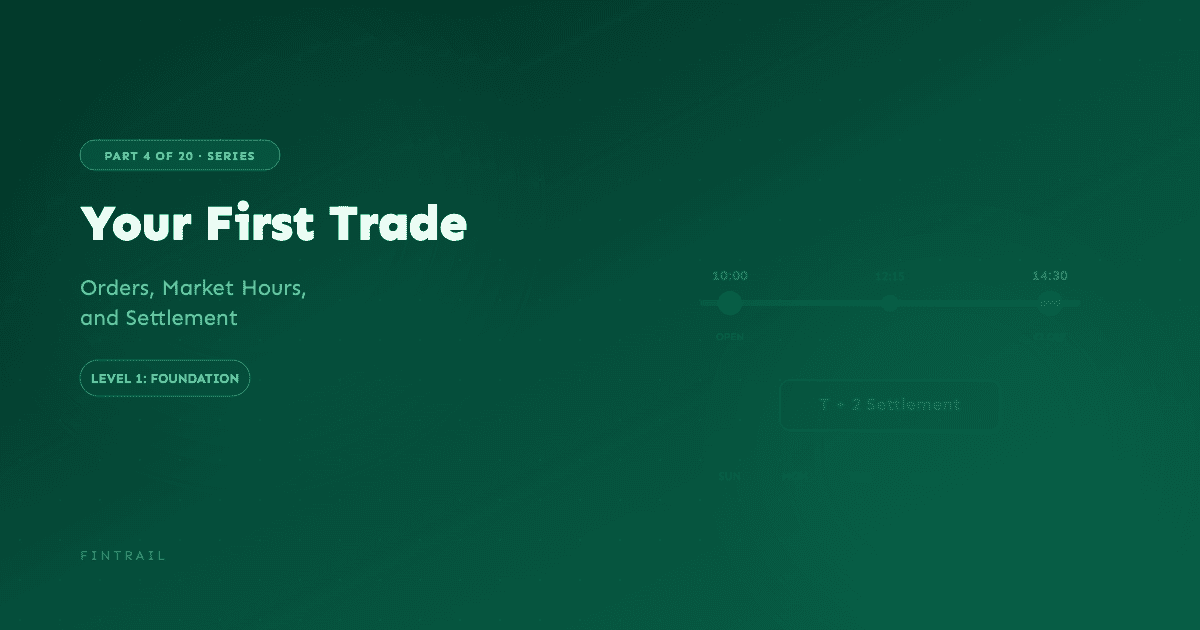
Pre-Opening Session (9:30 AM – 10:00 AM)
During this window, you can enter, modify, or cancel orders, but no trades are executed. The system collects all orders and uses them to determine the opening price for each stock through a process called a call auction. This prevents the opening price from being wildly different from the previous day’s close.
Continuous Trading Session (10:00 AM – 2:30 PM)
This is when actual buying and selling happens. Orders are matched continuously throughout the session. Most of your trading activity will occur during this window. Prices update in real time as orders are executed.
Post-Closing Session (2:30 PM – 2:40 PM)
After continuous trading ends, there is a brief closing session that determines the official closing price for each stock. You can enter orders during this window, but they are matched at the closing price only.
All times are Bangladesh Standard Time (BST, UTC+6).
Understanding Order Types
When you decide to buy or sell, you need to specify how you want the order executed. The DSE supports two primary order types:
Market Order
A market order tells your broker: “Buy (or sell) this stock at the best available price right now.” It prioritizes speed over price. Your order will be filled quickly, but you may not get exactly the price you saw on screen, especially for less liquid stocks.
When to use it: When you want certainty of execution and the stock is liquid enough that the price will not slip much.
Example: You want to buy shares of a large bank stock that trades millions of taka per day. A market order will get you the shares almost instantly at very close to the displayed price.
Limit Order
A limit order tells your broker: “Buy this stock only at ৳X or lower” (or “sell only at ৳X or higher”). It prioritizes price over speed. Your order may not be filled at all if the price does not reach your limit.
When to use it: When you have a specific price target and are willing to wait. This is the recommended order type for most situations.
Example: A stock is currently trading at ৳152. You think ৳145 is a fair price. You place a limit buy order at ৳145. If the price drops to ৳145 during the session, your order gets filled. If it never reaches ৳145, nothing happens and your order expires at the end of the day (unless you set it as a Good Till Date order).
For new investors, limit orders are generally safer because you always know the maximum price you will pay or the minimum price you will receive.
Price Limits: Circuit Breakers
The DSE imposes daily price limits on individual stocks to prevent extreme volatility. As of current rules, most stocks can move a maximum of 10% up or down from the previous day’s closing price in a single trading session.
If a stock closed at ৳100 yesterday:
- It can trade as high as ৳110 (upper circuit)
- It can trade as low as ৳90 (lower circuit)
When a stock hits its upper circuit, it means buyers are willing to pay more but the system will not allow further increases that day. This often happens during periods of intense positive news. Conversely, hitting the lower circuit means heavy selling pressure has pushed the price to its daily floor.
Circuit breakers exist to protect investors from panic-driven crashes and euphoria-driven bubbles, at least within a single day. However, a stock can hit its circuit limit for multiple consecutive days, so they do not prevent longer-term price movements.
Placing Your First Order: A Walkthrough
Here is what a typical first buy order looks like:
- Log in to your broker’s online trading platform.
- Search for the stock you want to buy by its ticker symbol or company name.
- Check the current price and the day’s trading activity. Look at the bid-ask spread — the difference between the highest price a buyer is offering and the lowest price a seller is asking.
- Enter your order:
- Side: Buy
- Quantity: How many shares (for example, 100)
- Order type: Limit
- Price: Your limit price (for example, ৳85)
- Review the order summary, including the total cost and commission.
- Submit the order.
Your order enters the DSE’s order book. If a seller is willing to sell at ৳85 or less, the trade executes. If not, your order waits in the queue.
A practical tip: Before your first real trade, spend a few days watching the stock you are interested in. Note its price range, how much it moves in a day, and how much volume it trades. This gives you context for setting a reasonable limit price.
What Happens After Your Trade Executes
The moment your buy order is matched with a seller, several things happen in sequence:
Day 0 (Trade Day, or T)
Your broker confirms the trade. You see the shares reflected in your portfolio as a pending trade. The money is deducted from your available balance with the broker.
Day T+1
The clearing house processes the trade. Behind the scenes, the buyer’s broker and seller’s broker exchange information and prepare for settlement.
Day T+2
Settlement day. The shares are officially credited to your BO account at CDBL. The money is transferred from the buyer’s side to the seller’s side. You now legally own the shares.
This T+2 cycle means that if you buy shares on Sunday, they settle on Tuesday. If you buy on Wednesday, they settle on the following Sunday (Friday and Saturday are weekends, so the next business day is Sunday).
Why does this matter? Until settlement, you technically do not own the shares. You cannot sell shares on the same day you buy them unless your broker allows intraday trading (buying and selling within the same session), which has its own rules and risks. For a long-term investor, T+2 is a minor detail — but it is important to understand.
The Bid-Ask Spread
When you look at a stock’s market data, you will see two prices:
- Bid price: The highest price a buyer is currently willing to pay (for example, ৳84.80)
- Ask price: The lowest price a seller is currently willing to accept (for example, ৳85.20)
The difference — ৳0.40 in this case — is the bid-ask spread. For large, liquid stocks (major banks, telecoms), the spread is typically small: ৳0.10–৳0.50. For small, illiquid stocks, the spread can be ৳2–৳5 or more.
A wide spread is a warning sign. It means fewer people are trading the stock, and you may have difficulty buying or selling at a fair price. As a beginner, favor stocks with narrow bid-ask spreads.
Your First Trade Checklist
Before clicking “buy” on your very first trade, confirm these:
- You have researched the company, not just heard a tip
- You understand what the company does and how it earns money
- You are using a limit order, not a market order
- The amount you are investing is money you will not need for at least a year
- You have checked the bid-ask spread and current volume
- You know the total cost including commissions and fees
What Is Next in This Series
Congratulations — you now have the foundation to begin investing on the DSE. You understand what shares are, how the DSE is structured, how to open an account, and how to place a trade.
In Level 2 of this series, we will move into research and analysis: how to read financial statements, evaluate a company’s fundamentals, and use metrics like P/E ratio and EPS to make informed decisions. If you want a head start, check out our guide to understanding P/E ratio.
Think About This
- You place a limit buy order for 200 shares at ৳95, but the stock is currently trading at ৳98. The price drops to ৳95.50 during the day but never reaches ৳95. Your order is not filled. Was your limit too aggressive? How would you decide where to set the limit next time?
- Why do you think the DSE uses a T+2 settlement cycle instead of settling trades instantly? What are the advantages and disadvantages for investors?
- If a stock has hit its upper circuit limit of 10% for three consecutive days, what might that signal? Should you rush to buy it on day four? What risks are you taking if you do?